unverifiable
“They are found in these parts of the Pacific Ocean, or wherever the most food is.”
This statement is too vague or lacks sufficient context to be fact-checked (e.g., unclear referents like "they" or "we").
Loading...
Enjoy the videos and music you love, upload original content, and share it all with friends, family, and the world on YouTube.
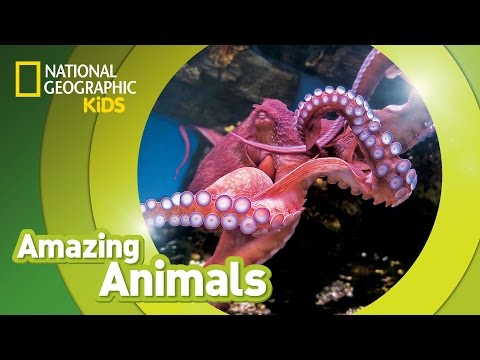
Weighted from verifiable claims only.
Confidence reflects how consistent the evidence is across the claims in this report.
Sign in to keep a private copy of this report in your report history.
13 of 13 claims shown
This statement is too vague or lacks sufficient context to be fact-checked (e.g., unclear referents like "they" or "we").
The evidence provided does not address the claim about the giant Pacific octopus being the largest species of octopus. Instead, it discusses a separate topic regarding a video of a different type of octopus, which is unrelated to the claim.
The evidence clearly supports the claim that the Giant Pacific Octopus will eat birds, with multiple documented instances of this behavior, including an octopus attacking a seagull and nearly drowning a bald eagle. These examples demonstrate that the species is a generalist predator that will consume available food sources, including birds.
The evidence from multiple reputable sources confirms that the Giant Pacific Octopus possesses a beak, which is similar in structure to that of birds. This beak is a two-part structure made of chitin, located in the center of its arms, and is used for breaking down food, particularly hard-shelled prey. The consistency of this information across various authoritative sources supports the claim confidently.
The evidence from multiple reputable sources consistently indicates that giant Pacific octopuses have substantial appetites and require a significant amount of food to grow and survive. They consume between 2% and 4% of their body weight daily, which is crucial for their rapid growth and overall health. This high intake is supported by their diverse carnivorous diet and the efficient conversion of nutrients into energy and muscle, as detailed in the evidence provided.
The evidence from multiple reputable sources confirms that the Giant Pacific Octopus uses toxic saliva or venom to paralyze its prey, either through a bite or by drilling into hard-shelled prey. This consistent information across various authoritative sources supports the claim confidently.
Octopuses possess specialized cells in their skin, such as chromatophores, iridophores, and leucophores, which enable them to change color and blend into their surroundings effectively. This ability is crucial for evading predators and ambushing prey, and they can also alter their skin texture to enhance camouflage. The evidence consistently supports the claim that octopuses can change color and blend in wherever they go.
The evidence from multiple reputable sources consistently confirms that the Giant Pacific Octopus has approximately 280 suction cups on each of its eight arms, totaling around 2,140 to 2,240 suction cups. This information is corroborated by various authoritative marine biology sources, indicating a strong consensus on the claim.
The evidence from multiple reputable sources confirms that octopuses have three hearts, consisting of two branchial hearts for pumping blood through the gills and one systemic heart for circulating oxygenated blood throughout the body. This anatomical feature is consistently described across all sources, providing a clear and accurate understanding of octopus physiology.
Octopuses possess blue blood due to a copper-rich protein called hemocyanin, which is responsible for oxygen transport in their circulatory system. This is confirmed by multiple reputable sources, including National Geographic, HowStuffWorks, and scientific literature, all stating that hemocyanin binds with oxygen and turns blue, contrasting with the red blood of humans that uses iron-based hemoglobin.
This is a subjective opinion or value judgment, not a factual claim that can be verified.
This is a subjective opinion or value judgment, not a factual claim that can be verified.
This is a subjective opinion or value judgment, not a factual claim that can be verified.