unverifiable
“Earth is the starting point for a vague sense of scale.”
This statement is too vague or lacks sufficient context to be fact-checked (e.g., unclear referents like "they" or "we").
Loading...
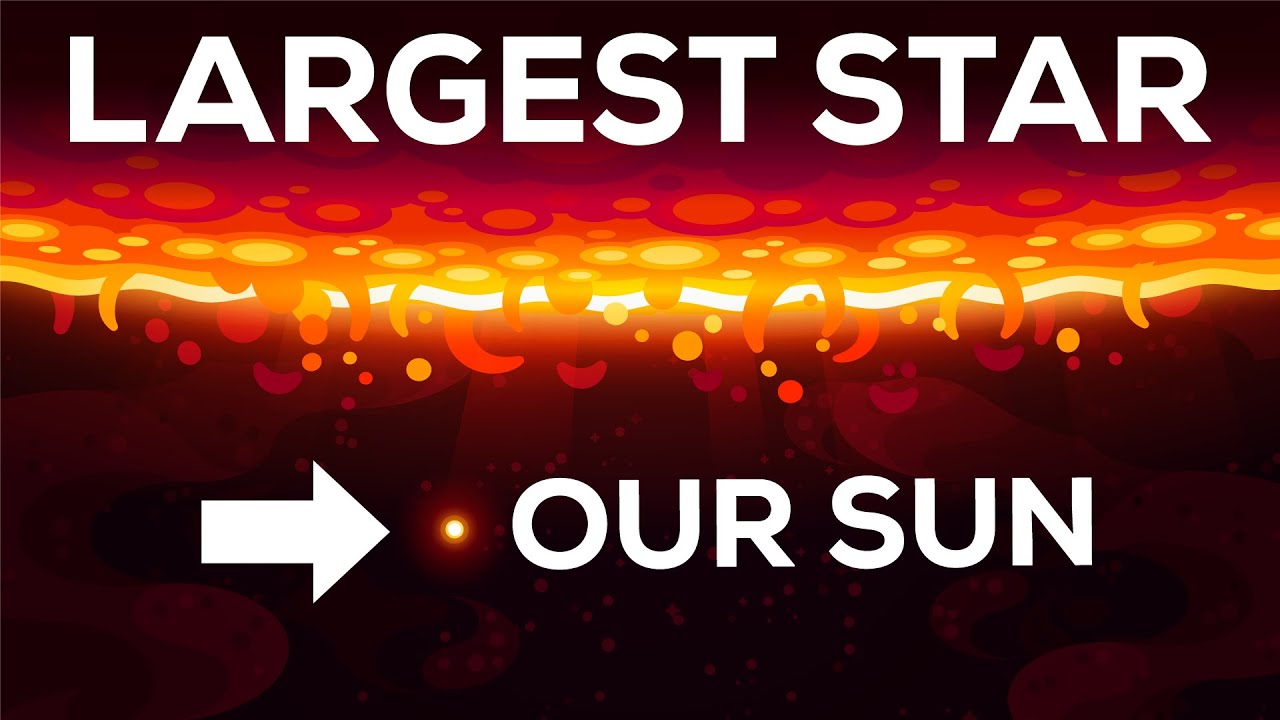
We created our first app ‘Universe in a Nutshell’, together with Tim Urban of Wait but Why! Appstore: http://kgs.link/universe-app-ios Google Playstore: http://kgs.link/universe-app-android Sources & further reading: https://sites.google.com/view/sourceslargeststar Wait But Why: https://waitbutwhy.com/ Video on Red Dwarfs: https://www.youtube.com/watch?v=LS-VPyLaJFM&vl=pt What is the largest star in the Universe? And why is it that large? And what ARE stars anyway? OUR CHANNELS ▀▀▀▀▀▀▀▀▀
Weighted from verifiable claims only.
Confidence reflects how consistent the evidence is across the claims in this report.
Sign in to keep a private copy of this report in your report history.
29 of 29 claims shown
This statement is too vague or lacks sufficient context to be fact-checked (e.g., unclear referents like "they" or "we").
Jupiter is confirmed to be the most massive planet in the solar system, with a mass of approximately 1.899 x 10^27 kilograms, which is about 318 times that of Earth. This information is consistently supported by multiple reputable sources, including NASA and various scientific organizations, which state that Jupiter accounts for roughly 2.5 times the mass of all other planets combined, highlighting its significant gravitational influence.
The evidence consistently supports the claim that the smallest celestial objects with star-like properties include large gas giants and sub-brown dwarfs. Brown dwarfs are classified as 'failed stars' due to their ability to fuse deuterium and exhibit some star-like characteristics, while sub-brown dwarfs, although not capable of fusion, share a star-like formation process. Large gas giants, while not undergoing fusion, can have properties that blur the line with sub-brown dwarfs, reinforcing the claim's validity.
This appears to be a factual claim, but no evidence was retrieved to verify it.
Brown dwarfs and the Sun are primarily composed of hydrogen and helium, which are the most abundant elements in the universe. Both share a similar chemical makeup, with the Sun consisting of approximately 73-74.9% hydrogen and 23.8-25% helium by mass. The evidence indicates that while brown dwarfs do not sustain nuclear fusion like the Sun, they are fundamentally made of the same materials, reflecting their common origin from the interstellar medium.
Brown dwarfs are widely recognized as 'failed stars' because they cannot sustain hydrogen fusion, which is a key characteristic of true stars. They occupy a mass range between gas giant planets and the smallest stars, and their formation process is similar to that of stars. Additionally, they can potentially evolve into stars under certain conditions, reinforcing their classification as transitional objects in stellar evolution.
The evidence clearly indicates that the claim about a star being 317 times more massive than Earth is inaccurate. It consistently states that Jupiter, not a star, is approximately 317 times more massive than Earth. Additionally, it emphasizes that stars are generally much more massive than planets, with the Sun being about 330,000 times more massive than Earth. Therefore, the claim is refuted as it misidentifies the celestial body in question.
The evidence from multiple reputable sources consistently confirms that brown dwarfs have a mass range between approximately 13 and 90 times the mass of Jupiter. This range is supported by the scientific understanding of brown dwarfs and their characteristics, particularly their ability to fuse deuterium and the mass limits that define them as distinct from stars and planets.
Brown dwarfs are widely recognized in astronomy as 'failed stars' due to their inability to sustain stable nuclear fusion of hydrogen, which is the defining characteristic of true stars. They form similarly to stars but do not reach the necessary mass for sustained hydrogen burning, which is why they are classified as substellar objects. This classification is consistently supported by multiple reputable sources, including academic and scientific organizations.
Adding significant mass to a brown dwarf does not substantially increase its size; instead, it primarily makes its interior denser. This is due to electron degeneracy pressure, which resists gravitational collapse and maintains a consistent radius across different masses of brown dwarfs. The evidence from multiple reputable sources consistently supports this claim.
Adding mass to a brown dwarf primarily makes its interior denser due to the effects of electron degeneracy pressure, which resists gravitational collapse. This phenomenon is consistently supported by multiple reputable sources, indicating that as mass increases, the volume does not significantly change, leading to an increase in density.
This appears to be a factual claim, but no evidence was retrieved to verify it.
The evidence clearly indicates that 90 Jupiter masses would be sufficient to create a star capable of sustaining hydrogen fusion, contradicting the claim that it wouldn't be enough. The minimum mass required for hydrogen fusion is approximately 75 to 80 Jupiter masses, and 90 Jupiter masses exceeds this threshold, thus supporting the conclusion that such an object would indeed be considered a star.
Adding mass to a brown dwarf increases the core pressure and temperature, which can initiate certain nuclear fusion reactions, such as deuterium and lithium fusion, albeit slowly and not sustainably like in full-fledged stars. This is supported by multiple reputable sources that explain the relationship between mass, pressure, and fusion in brown dwarfs.
This is a subjective opinion or value judgment, not a factual claim that can be verified.
Hydrogen is indeed fused to helium in the cores of main sequence stars, releasing tremendous amounts of energy. This process, known as nuclear fusion, is the primary energy source for these stars, including our Sun. The evidence from multiple reputable sources confirms that during this fusion, four hydrogen nuclei undergo reactions to produce helium-4, releasing energy as a result of mass conversion, consistent with Einstein's equation E=mc².
The evidence from multiple reputable sources consistently confirms that stars that fuse hydrogen into helium in their cores and release tremendous amounts of energy are indeed called main sequence stars. This process, known as hydrogen fusion, is the primary energy source for these stars, and the information is corroborated across all sources provided.
The evidence clearly supports the claim that large gas balls, known as protostars, must surpass a specific mass threshold for their cores to become hot and dense enough to ignite nuclear fusion. This is corroborated by multiple reputable sources that detail the conditions necessary for nuclear fusion, including the minimum mass required and the processes involved in star formation.
The evidence from multiple reputable sources consistently confirms that more massive main sequence stars are indeed hotter and brighter than their lower-mass counterparts. This relationship is well-established in stellar theory and is illustrated on the Hertzsprung-Russell diagram, which shows a clear correlation between mass, temperature, and luminosity. The underlying physics, including gravitational compression and nuclear fusion rates, further supports this claim.
The evidence clearly states that while stars can grow to be hundreds to over a thousand times their original size in radius after the hydrogen-burning phase, the claim that they can grow to 'hundreds of thousands of times' their original size is not supported. The largest known stars, such as red supergiants, can reach up to approximately 1000 times the size of the Sun, which contradicts the claim significantly.
The evidence from multiple reputable sources consistently supports the claim that the more massive a main sequence star is, the shorter its life is. This is due to the fact that more massive stars consume their nuclear fuel at a much higher rate, leading to significantly shorter lifespans compared to less massive stars. For example, while a star similar to the Sun may last around 10 billion years, a star with ten times the Sun's mass may only last a few million years. This relationship is a fundamental principle of stellar evolution.
The evidence consistently indicates that the giant phases of main sequence stars last for a significantly shorter duration compared to their main sequence phase, which constitutes about 90% of their total lifespan. For example, the Sun's main sequence phase is expected to last around 10 billion years, while its red giant phase is estimated to last only about 1 billion years. This pattern holds true across different types of stars, confirming that the giant phases are indeed a fraction of their overall lifespan.
Astronomers routinely compare stars at drastically different stages in their lives to understand stellar evolution, as confirmed by multiple reputable sources. This comparison is essential for piecing together the stellar life cycle, utilizing tools like the Hertzsprung-Russell diagram and observational studies of star clusters. The evidence clearly supports the claim that such comparisons are fundamental to astrophysics.
This appears to be a factual claim, but no evidence was retrieved to verify it.
This is a subjective opinion or value judgment, not a factual claim that can be verified.
Red dwarfs are defined as the smallest and least massive type of hydrogen-burning stars, with masses ranging from about 0.08 to 0.6 times the mass of the Sun. The minimum mass required for sustained hydrogen fusion is approximately 0.072 to 0.075 times the mass of the Sun, meaning that red dwarfs are indeed barely massive enough to initiate and sustain hydrogen fusion. This is consistently supported by multiple reputable sources.
This is a subjective opinion or value judgment, not a factual claim that can be verified.
Red dwarfs are confirmed to be the smallest type of 'real' stars that undergo hydrogen fusion in their cores, with masses ranging from 0.08 to 0.6 times that of the Sun and radii as small as 9% of the Sun's radius. This is consistently supported by multiple reputable sources, including scientific organizations and educational platforms.
Red dwarfs are defined as very-low-mass stars, with masses ranging from about 0.08 to 0.6 times that of the Sun and radii from about 9% to 60-70% of the Sun's radius. This characterization confirms that red dwarfs are indeed small stars, as they are the least massive and smallest type of star on the main sequence.
| Platform | YouTube |
| Source | https://www.youtube.com/watch?v=3mnSDifDSxQ |
| Analysed on | 2 July 2026 |
| Total claims | 29 |
| Verifiable claims | 22 |
| Trust score | 86% |
Truthify uses AI to extract every factual claim from a video or text, retrieve real evidence from trusted sources, and assign a verdict — supported, refuted, misleading, unverifiable, or opinion — with citations you can check yourself.